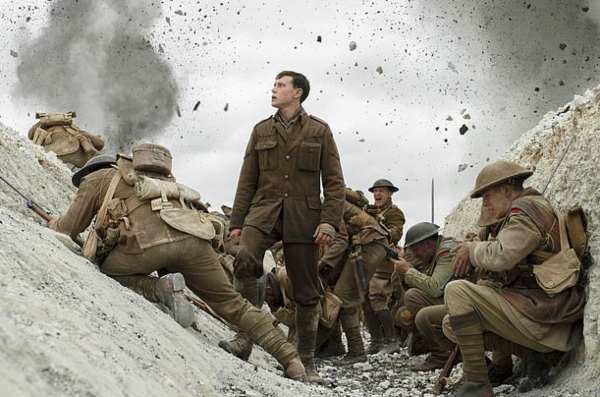
Voor het eerst sinds, ik denk wel, jaren weer eens naar de film geweest. Gelokt door de muziek van componist Thomas Newman, de beschrijving opgezocht van 1917. Verhaal, gebaseerd op ware gebeurtenissen, op de Eerste Wereldoorlog*.
Extra lokkertje dat ik hoorde op de radio was dat dit geen film is die je op je tv-scherm thuis moet bekijken, maar op groot scherm in de bioscoop.
Hoe het er thuis zou uitzien, weet ik niet. Wat ik wel weet is dat de film, ‘geschoten ‘ in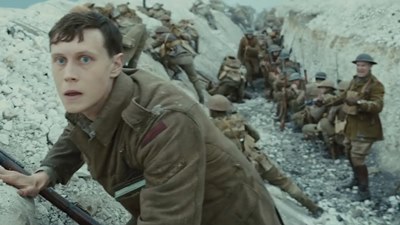 4K (scherpte van ongeveer 4000 pixels) oogverblindend is. Haarscherp, loepzuiver, of welk woord je er ook maar voor wilt gebruiken. Een ongeëvenaarde lust voor het oog.
En het geluid – Dolby Atmos – is ook onovertroffen. Als in de film van regisseur Sam Mendes de granaten inslaan, voel je je stoel in de filmzaal trillen. Als korporaal William Schofield (een overtuigende rol van George McKay) over een deels ingestorte brug moet rennen hoor je hem rechts uit de speakers komen. Als de camera draait en hij links in beeld is, komt het geluid ook daar vandaan. Voor de ervaren bioscoopbezoeker wellicht niet nieuw, maar voor mij als tv-kijker wel.
Hier een idee hoe er gefilmd is:
Maar goed, het gaat natuurlijk (ook) om het verhaal. Twee korporaals (naast Schofield, Tom Blake – Dean-Charles Chapman – maar die sneuvelt halverwege) krijgen de opdracht een boodschap van generaal Erinmore te brengen naar kolonel MacKenzie (Benedict Cumberbatch, Sherlock Holmes in de huidige versie) dwars door vijandelijk gebied. Indrukwekkend gefilmd. Ik weet dat het filmsets zijn en dat niets is wat het lijkt, maar 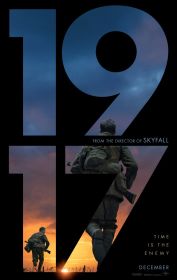 het komt met 4K en Dolby Atmos allemaal heel echt echter. Dat mag gerust een compliment worden genoemd voor de makers.
Hoe knap het kan zijn, weet ik van een vakantie in Schotland jaren geleden. Met vriend G. P. daalden we in Glencoe met een skilift af en zagen standing stones. Die kende ik wel in Schotland, maar niet hier. We klommen weer naar boven en zagen er mensen bij lopen. We dachten dat de stenen net ontdekt waren en dat er onderzoek naar werd gedaan. De stenen bleken van piepschuim te zijn en werden vanwege een naderende storm verankerd. Het betrof een filmset voor Rob Roy…
Nu weer. Waar Schofield over de deels ingestorte brug rent, zie je op de achtergrond een gebouw. Een deel is echt het pompgebouw van de Govan Graving docks in Glasgow. De rest is nep. Of ‘prop’ zoals het mooier klinkt in de filmwereld.
Fraaie opname ook van Schofield (of een stuntman?) in het water van de rivier Tees in Noord-Engeland wordt meegesleurd. Een groot deel van de film werd opgenomen op een oude militaire basis in Salisbury, waar voor deze film loopgraven werden aangelegd.
Gelukkig een film zonder pauze. De zit van twee uur (langer als je de reclame en de rest van het voorprogramma meerekent) is geen straf. Cinema Gouda heeft uitstekende stoelen, met voldoende beenruimte. 1917 is daar te zien tot en met (in elk geval) volgende week woensdag.
Een aanrader!
Mooie quotes uit de film:
Down to Gehenna or up to the Throne, He travels the fastest who travels alone.
(Rudyard Kipling, The Winners (‘The Story of the Gadsbys’)
There is only one way this war ends – Last man standing
O hope today might be a good day Hope is a dangerous thing
Through this holy unction, may the Lord pardon you your faults, and whatever sins thou hast committed.
They went to sea in a Sieve, they did,
In a Sieve they went to sea:
In spite of all their friends could say,
On a winter’s morn, on a stormy day,
In a Sieve they went to sea!
And when the Sieve turned round and round,
And every one cried, ‘You’ll all be drowned!’
They called aloud, ‘Our Sieve ain’t big,
But we don’t care a button! we don’t care a fig!
In a Sieve we’ll go to sea!’
Far and few, far and few,
Are the lands where the Jumblies live;
Their heads are green, and their hands are blue,
And they went to sea in a Sieve.
They sailed away in a Sieve, they did,
In a Sieve they sailed so fast,
With only a beautiful pea-green veil
Tied with a riband by way of a sail,
To a small tobacco-pipe mast;
And every one said, who saw them go,
‘O won’t they be soon upset, you know!
For the sky is dark, and the voyage is long,
And happen what may, it’s extremely wrong
In a Sieve to sail so fast!’
Far and few, far and few,
Are the lands where the Jumblies live;
Their heads are green, and their hands are blue,
And they went to sea in a Sieve.
The water it soon came in, it did,
The water it soon came in;
So to keep them dry, they wrapped their feet
In a pinky paper all folded neat,
And they fastened it down with a pin.
And they passed the night in a crockery-jar,
And each of them said, ‘How wise we are!
Though the sky be dark, and the voyage be long,
Yet we never can think we were rash or wrong,
While round in our Sieve we spin!’
Far and few, far and few,
Are the lands where the Jumblies live;
Their heads are green, and their hands are blue,
And they went to sea in a Sieve.
And all night long they sailed away;
And when the sun went down,
They whistled and warbled a moony song
To the echoing sound of a coppery gong,
In the shade of the mountains brown.
‘O Timballo! How happy we are,
When we live in a sieve and a crockery-jar,
And all night long in the moonlight pale,
We sail away with a pea-green sail,
In the shade of the mountains brown!’
Far and few, far and few,
Are the lands where the Jumblies live;
Their heads are green, and their hands are blue,
And they went to sea in a Sieve.
They sailed to the Western Sea, they did,
To a land all covered with trees,
And they bought an Owl, and a useful Cart,
And a pound of Rice, and a Cranberry Tart,
And a hive of silvery Bees.
And they bought a Pig, and some green Jack-daws,
And a lovely Monkey with lollipop paws,
And forty bottles of Ring-Bo-Ree,
And no end of Stilton Cheese.
Far and few, far and few,
Are the lands where the Jumblies live;
Their heads are green, and their hands are blue,
And they went to sea in a Sieve.
And in twenty years they all came back,
In twenty years or more,
And every one said, ‘How tall they’ve grown!’
For they’ve been to the Lakes, and the Torrible Zone,
And the hills of the Chankly Bore;
And they drank their health, and gave them a feast
Of dumplings made of beautiful yeast;
And everyone said, ‘If we only live,
We too will go to sea in a Sieve,—
To the hills of the Chankly Bore!’
Far and few, far and few,
Are the lands where the Jumblies live;
Their heads are green, and their hands are blue,
And they went to sea in a Sieve.
(The Jumblies, door Edward Lear)
* (in maart 2019 verklaarde Mendes dat het verhaal geïnspireerd werd door een anekdote over zijn grootvader Alfred Mendes, een oud-strijder van de Eerste Wereldoorlog. Die had in 1917 tijdens de derde slag in Ieper als boodschapper twee dagen lang granaatinslagen, sluipschutters en machinegeweren getrotseerd. Zijn oorlogservaringen werden in 2002 ook neergeschreven in The Autobiography of Alfred H. Mendes 1897–1991)
 Puffinnest